

Most of us never pause to notice our own breath, let alone consider the subtle ways our nostrils operate. Yet, behind the scenes, a quiet rhythm flows from left to right and back again. This undercurrent is the nasal cycle—a natural process with a remarkable link to our mind and emotions.
What is the nasal cycle?
The nasal cycle refers to the regular alternation in airflow between the left and right nostrils. Over a period of roughly two to six hours, one nostril becomes more open, allowing freer breath, while the other narrows. Then the process reverses. This cycle is managed by the body’s autonomic nervous system, often without conscious recognition.
Our nostrils take turns as primary airways, all day and night.
We have found that this process is not simply about breathing. It plays roles in temperature control, humidity, and even how the brain functions. The pattern is subtle. Most adults cannot feel it unless they try, yet it flows within us regardless of awareness.
How the nasal cycle works in the body
Deep inside the nose, erectile tissues swell and shrink, regulating airflow. This happens because the sympathetic and parasympathetic systems balance each other. Blood flow increases on one side, causing mild blockage, while the other side opens wider for easier breathing. After some hours, the process swaps sides.
- The nasal cycle is not linked to disease or congestion from infection.
- It happens in healthy people, during wake and sleep.
- Changes in body posture, stress, or time of day can affect it.
Nasal airflow is not constant between your nostrils—one will dominate, then yield to the other.
What science says about nostril dominance
When we breathe mainly through one nostril, it is not by chance. This state, called nostril dominance, affects both body and mind. Studies show connections between breathing on either side and activity in the brain’s left or right hemisphere.
For example, left nostril dominance tends to activate the right side of the brain, which may be more connected with creativity, emotions, and holistic thought. Right nostril dominance, often associated with the left brain, might link to language, logic, and detail-oriented activity.
It is not simply about which nostril is open. The nervous system shifts, gently nudging our focus and energy. We might not notice, but in our experience, energy, attention, and even mood can subtly shift with the airflow from one nostril to the other.
The mind-body connection: what shifting airflow can reveal
Here is where the story deepens. Our daily experience often brings shifts in mental states that are hard to trace. What if some of these changes quietly echo our own breath?
When the left nostril is dominant, people may feel calmer, introspective, or more attuned to emotions. When the right dominates, alertness and drive may increase. This isn’t absolute, but observing these patterns can help us understand ourselves a little better each day.
The breath does not just fuel the body—it reflects the mind.
We have noticed that by tracking our nasal cycle over several days, we can sometimes catch small clues. A day of focused tasks may coincide with more right nostril activity. A meditative hour or a gentle walk, with the left. There is no need to force or judge, but curiosity can reveal patterns over time.
The link between nasal cycles and consciousness
Breath is often thought of as simple or mechanical, but we see it as a bridge between body, mind, and deeper awareness. The nasal cycle offers a real-time look at how physiology and consciousness relate.
Three concepts make this connection come alive:
- Awareness. By noticing nostril dominance, we observe subtle body rhythms and their link to mental states.
- Self-regulation. Recognizing our own patterns can offer chances to shift mood or focus simply by being conscious of how we breathe.
- Integration. Observing the nasal cycle invites acceptance of natural flow, rather than constant striving for balance.

How to observe your own cycle
It starts with a quiet moment. Sit or stand comfortably. Gently close one nostril with a finger and breathe in through the other, then switch sides. Notice which feels clearer. Repeat a few times during the day and make note of which side dominates—and how you feel at that moment, both physically and mentally.
Over time, we might find:
- Changes follow sleep-wake cycles.
- Emotionally charged moments coincide with shifts in airflow.
- Creative or focused periods align with a certain nostril being more open.
There is no need to obsess over the cycle or try to force it. It is enough to simply watch, to learn, and perhaps gain a bit more clarity on the landscape of our mind.
Practical exercises for self-awareness
If we want to develop awareness of this process, simple exercises can help. Some find it useful to keep a journal, jotting notes about which nostril is open and how they are feeling. Others might pause before starting a task, notice the airflow, and see if it matches their mood or focus.
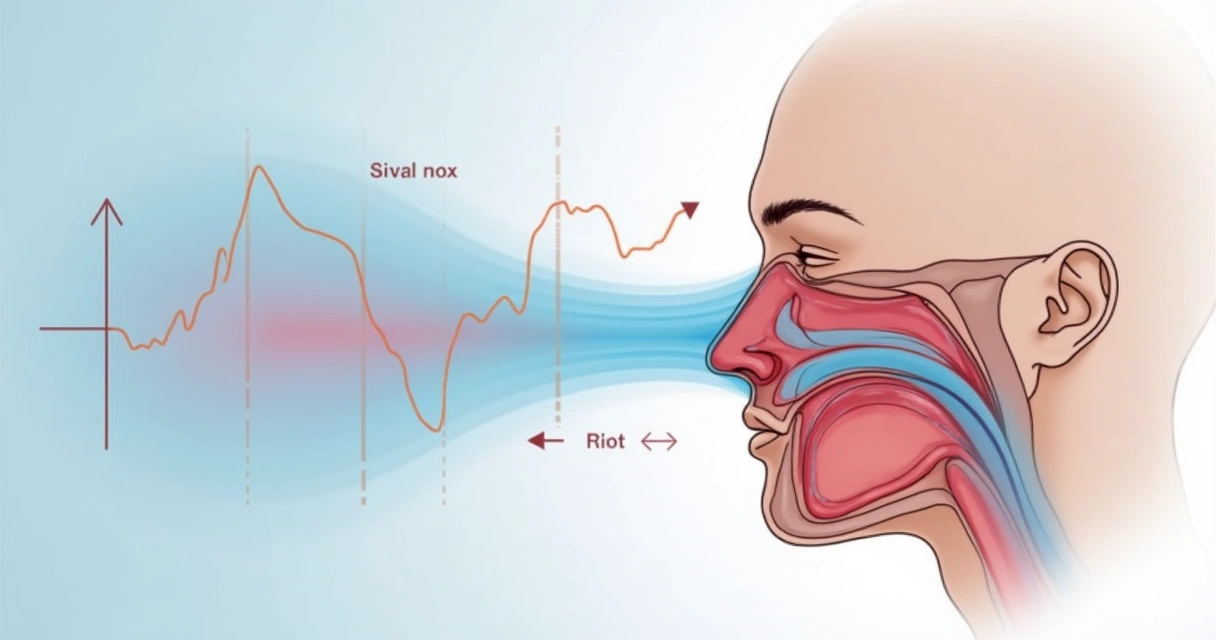
To observe the breath is to observe the mind in motion.
Simple awareness of the nasal cycle can open doors to deeper self-knowledge. With this knowledge, we start to relate more gently to our own changing thoughts and feelings, seeing them as part of a greater natural rhythm.
What can mindfulness of nasal cycles bring?
We think that, beyond curiosity, awareness of the nasal cycle can help with:
- Calmer reactions to stress, by recognizing when the body is already shifting.
- Better understanding of the link between body state and mood.
- Improved self-observation that supports decision-making and reflection.
Our daily rhythms are out of view for most of us, but tuning into them is an act of consciousness. We do not seek control, only the ability to see more clearly, relate more kindly, and live with more presence.
Conclusion
The nasal cycle, once ignored, becomes a bridge. It is the visible tip of the deeper flow between our physical being and the layers of mind beneath it. When we become curious about the shifting airflow in our nostrils, we find a quiet invitation: observe, reflect, and return to the gentle rhythm that has always been there. Breath and mind move together, side by side, offering a path toward greater self-understanding and conscious living.
Frequently asked questions
What is the nasal cycle?
The nasal cycle is the natural alternation in airflow between the left and right nostrils, happening usually every two to six hours. This process is automatic, managed by the nervous system, and goes on throughout our life, even if we do not notice it.
How does nasal airflow affect the brain?
Nasal airflow can influence which side of the brain becomes more active. For example, dominant breathing through the left nostril may be linked to emotional or holistic processing, while right nostril dominance might relate to logical or focused activity. These shifts are gentle and usually subtle.
Why do nostrils alternate breathing?
Nostrils alternate breathing to help regulate temperature, moisture, and to support the body's natural rhythms. This cycling also gives each nostril and its tissues a rest, preventing drying or irritation.
Can nasal cycles influence mental focus?
Yes, the nasal cycle may be related to mental focus. Some people notice that when a certain nostril is more open, they feel more focused or creative. Observing this link can provide insight about our own best times for certain activities.
How to observe my own nasal cycle?
To observe your nasal cycle, sit quietly and gently close one nostril. Breathe through the other and notice how easy or blocked it feels. Then switch sides. Write down which side feels clearer and repeat this check at different times during the day to notice the pattern.