A gentle breathing practice can help you respond to everyday tension or mild discomfort at home with more steadiness and attention. The aim is not to force pain away or take unusually deep breaths. Instead, notice what is happening, soften unnecessary effort, and stop if the practice makes you feel worse.
Key takeaways for a safe, useful practice
- Choose an easy breath, not the biggest breath you can take.
- Try a slightly longer, comfortable exhale only if it feels natural.
- Use breathing to support awareness and comfort, not to diagnose symptoms.
- Stop for dizziness, air hunger, rising distress, or worsening discomfort.
- New or severe symptoms call for medical attention, not a breathing exercise.
First decide whether breathing practice is appropriate
Conscious breathing is best suited to mild, familiar discomfort when you feel safe enough to pause. It may help you notice whether you are bracing your shoulders, clenching your jaw, or rushing through a task. That awareness can give you a moment to adjust your posture or take a break.
Breathing exercises cannot tell you why something hurts or feels uncomfortable. Do not use them to manage sudden, severe, unexplained, or worsening symptoms. If you are concerned about your symptoms, seek medical guidance; if symptoms seem urgent, contact emergency services. A guide to relaxation techniques can help frame these practices as supportive, rather than a substitute for appropriate care.
If breath-focused attention increases unease, move your attention outward instead. Notice the room, feel your feet against the floor, or choose a familiar sound as an anchor. You can explore how sensory awareness supports presence without changing your breathing at all.
Prepare your body without trying to breathe deeply
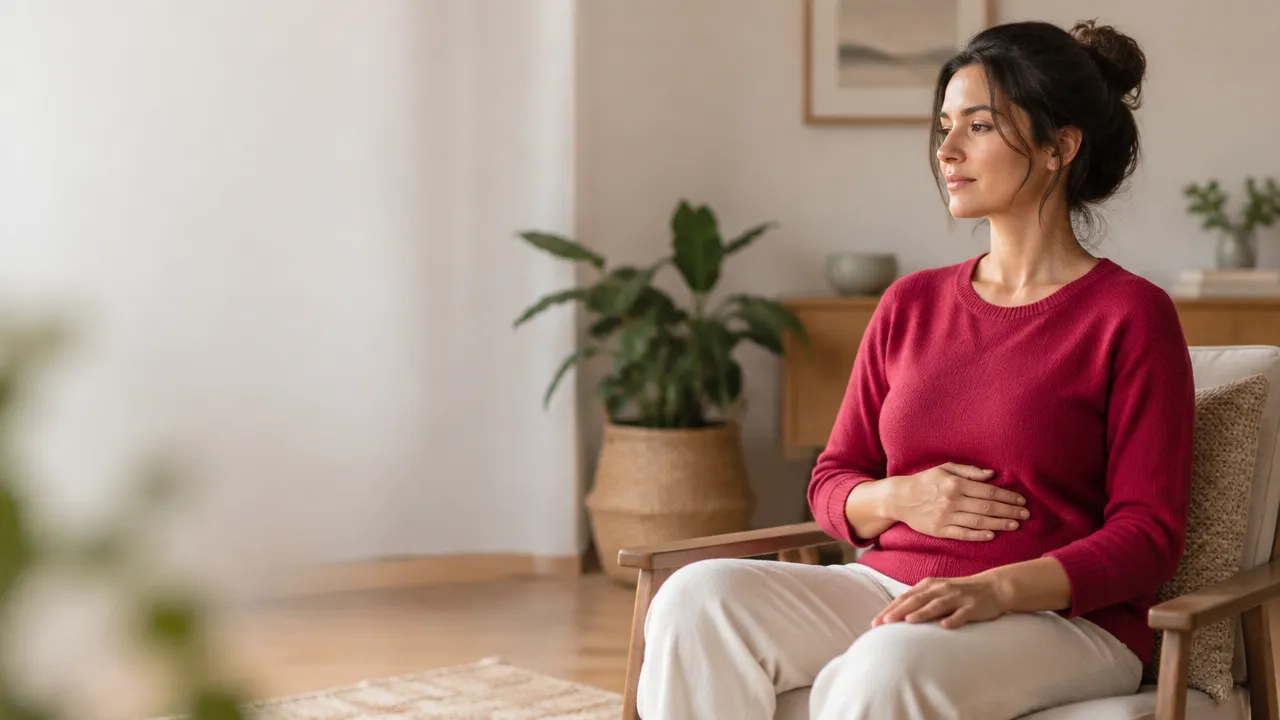
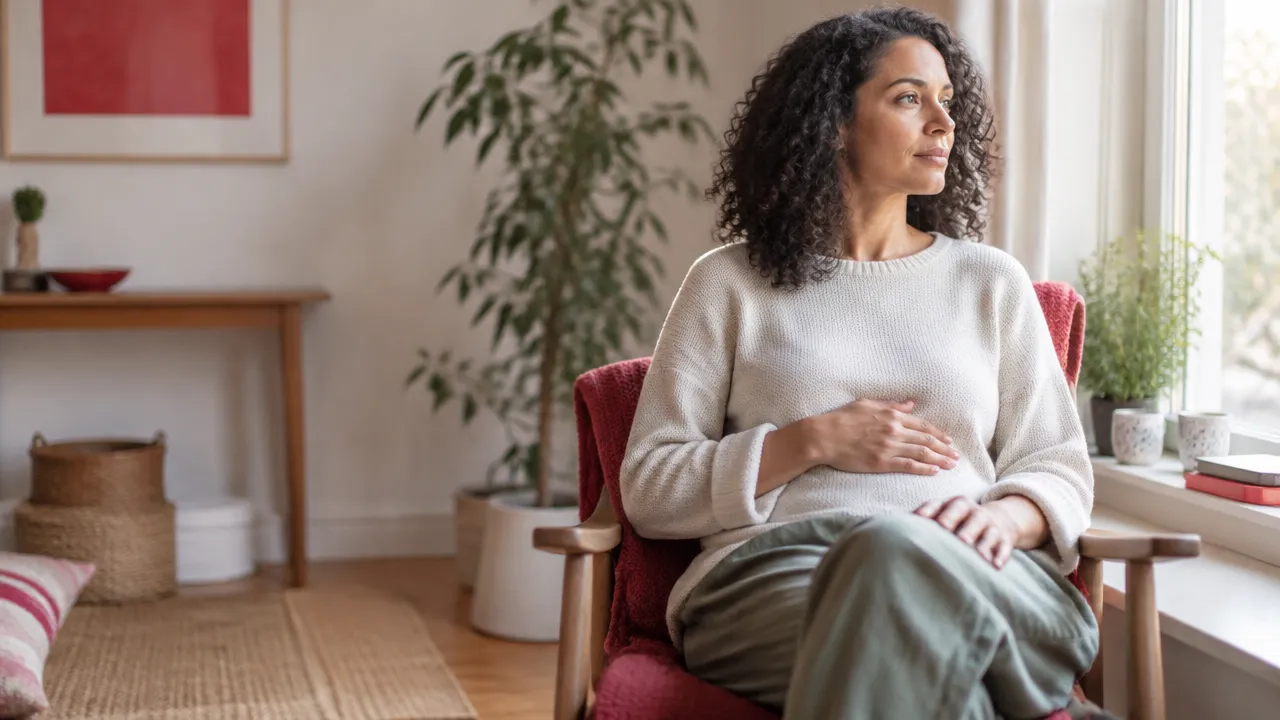
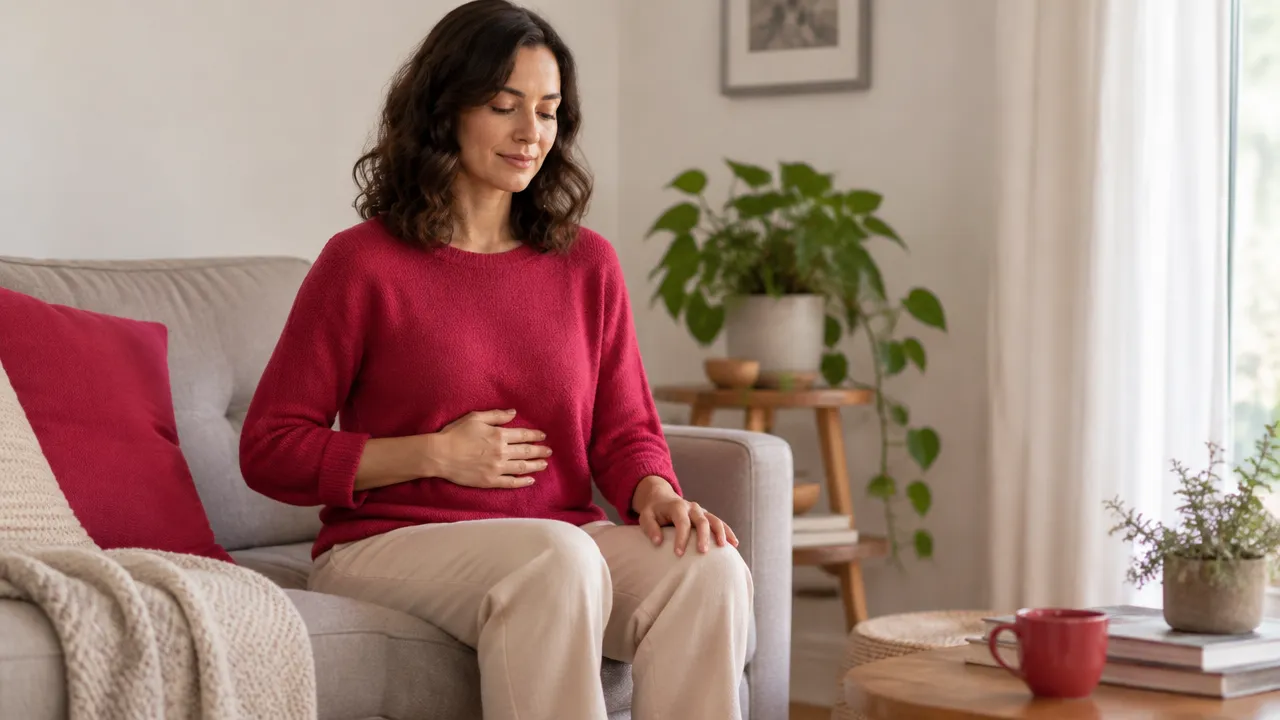
A comfortable position and a soft starting point make the exercise easier to assess. Sit with your feet supported, loosen tight clothing if you wish, and let your hands rest. Lying down is also fine if it does not aggravate your discomfort.
- Pause and notice your natural breathing for a few cycles.
- Check for effort in your jaw, shoulders, belly, and hands.
- Let the next inhale arrive on its own, without pulling in extra air.
- Allow the exhale to release gently, without pushing it out.
Keep the breath quiet and comfortable. A hand on the lower ribs can help you notice movement, but you do not need to make your abdomen rise dramatically. If you want a broader foundation, this guide to gentle breath regulation explores how to practice without turning the breath into a performance.
Try this short, adjustable breathing practice
Begin with two to five minutes, or less if that feels more comfortable. The time is a practical starting point, not a required dose. Stop whenever you want; finishing a set number of breaths is less important than staying at ease.
- Orient: Notice where you are and feel the support beneath you.
- Observe: Follow one natural inhale and exhale without changing them.
- Soften: Release a little tension from your shoulders or hands.
- Test a gentle rhythm: If comfortable, breathe in for about three counts and out for about four. Let the counts go if they feel restrictive.
- Reassess: Notice whether effort, attention, or discomfort changed. Return to ordinary breathing.
Counts are optional, and there is no need to hold your breath. If a longer exhale feels strained, let inhale and exhale remain the same length. This simple approach is different from trying to control every breath: the goal is to notice your experience and make small, reversible adjustments.
Use comfort, not a fixed breathing pattern, as your guide
The most useful pattern is one you can follow without strain. Box breathing, 4-7-8 breathing, and other counted methods work for some people, but pauses or long counts may feel uncomfortable to others. You do not need a named technique to practice conscious breathing.
Check three things before continuing: Is the breath still easy? Is your body less braced, or at least not more tense? Can you keep attention on the room as well as the breath? If any answer is no, return to your usual breathing and shift attention outward. The principles of slow breathing can be adapted to your comfort rather than followed as a rigid formula.
Some people find that focusing on breathing makes anxiety or air hunger more noticeable. That response is a reason to stop or choose a different grounding cue, not a reason to push through. For emotional discomfort, a breath practice adapted for anxiety should still feel manageable and optional.
Notice what changed, then choose your next step
After the practice, compare your experience with the moment before you started. You might notice less muscle bracing, a clearer sense of what you need, or no change at all. Each is useful information. Breathing does not have to produce immediate relief to help you recognize your limits.
If it helps, write down the situation, what you tried, and whether discomfort or effort changed. Over time, this can help you distinguish a helpful pause from a pattern that does not suit you. The point is self-observation, not proving that a breathing method works for everyone.
Try the practice during a quiet pause, after a demanding task, or before returning to a manageable activity. Do not delay medical care to repeat it. When you approach breathing as a choice rather than a command, it can support clearer attention, emotional steadiness, and more responsible decisions about what you need.
Frequently asked questions
What breathing techniques can help you calm down?
Slow, quiet breathing with an easy, slightly longer exhale is a sensible starting point for many people. Sit comfortably, breathe without forcing a deep inhale, and return to normal breathing if you feel dizzy, air hungry, or more distressed. Comfort matters more than completing a counted pattern.
How can you tell whether shortness of breath may be related to anxiety?
Anxiety can coincide with breathlessness, fast breathing, and fear, but those signs cannot establish the cause. New, severe, unexplained, or worsening shortness of breath needs medical assessment, especially with chest pain, faintness, or other alarming symptoms. Do not use a breathing exercise to rule out an emergency.
What is the 3-3-3 technique?
The phrase usually refers to a grounding exercise: notice three things you see, three things you hear, and move three parts of your body. It is not a standardized breathing pattern. You can pair it with a natural breath, but you do not need to change or hold your breathing.
Which breathing pattern is best for anxiety?
There is no single best breathing pattern for everyone with anxiety. Start with comfortable, unforced breathing and, if it feels easy, let the exhale last a little longer than the inhale. Skip counting or breath holds if they increase tension, dizziness, or air hunger, and seek care for concerning symptoms.
Can conscious breathing ease pain or other physical discomfort?
Conscious breathing may help you meet everyday discomfort with less tension and more awareness, but it cannot identify or treat the underlying cause. Try a gentle practice as a comfort skill, not a replacement for medical care. Stop if symptoms worsen, and seek professional advice for persistent or concerning discomfort.